
How Arrest Warrants Work in Virginia Beach City
An arrest warrant is a judge's order telling an officer to bring someone before the proper court. Virginia Beach City sends many first complaints to a magistrate. That magistrate weighs probable cause. If it holds up, the magistrate issues the warrant or a summons and handles initial bail or commitment. The case file then lands with the General District Court or the Circuit Court, depending on the charge and stage. Ask the holding clerk for the current entry. No single local database lists every warrant. The clerk's record, not a public list, is what answers the question.
Virginia Beach Arrest Warrants Start With a Complaint
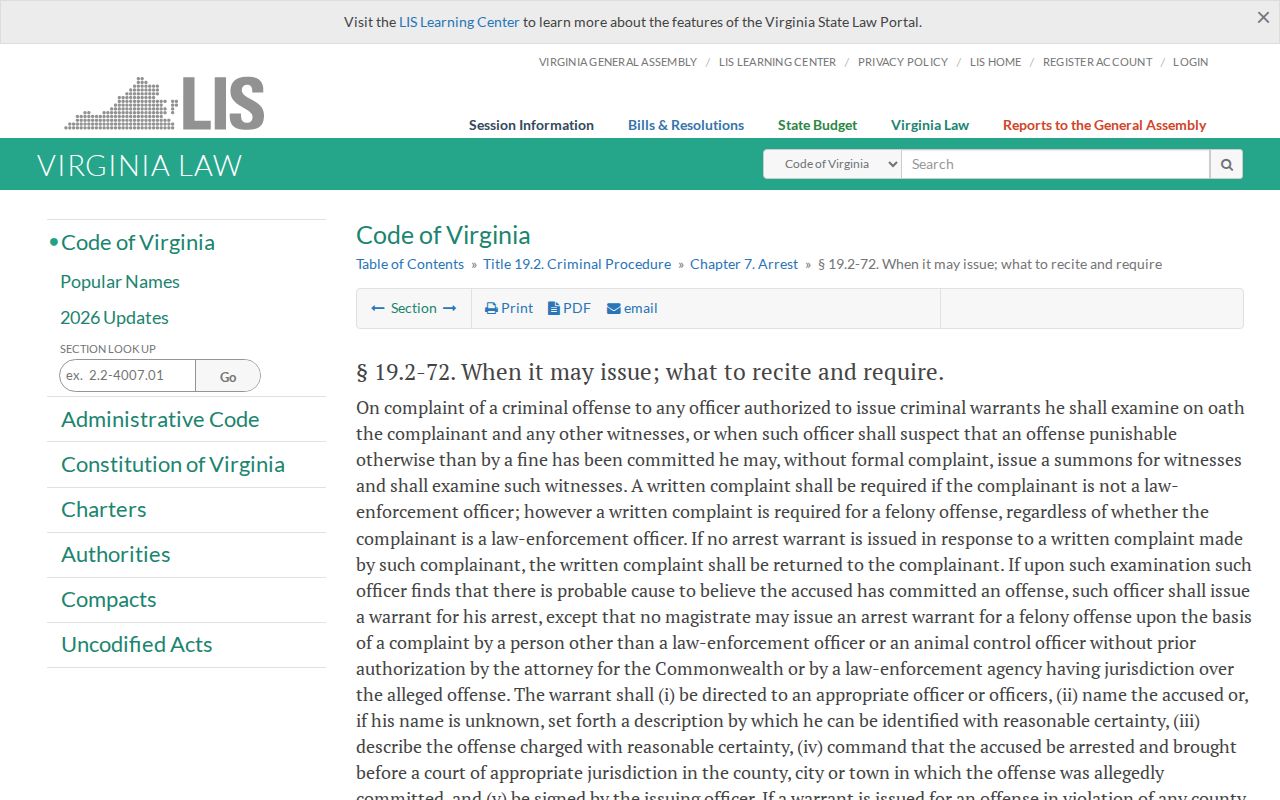
Every Virginia Beach City arrest warrant begins with a sworn complaint. Va. Code § 19.2-72 governs that oath and the probable-cause decision. The sworn facts name an offense. They also identify the person sought. Then come the issuing authority, a signature, direction to the officer, and return. The Virginia arrest-warrant statute sets the legal framework, while the Virginia Beach magistrate page describes local probable-cause, warrant, and bail functions. The Virginia Code page also explains the complaint and execution requirements used in Virginia Beach cases. Treat it as a statutory reference, not a live warrant search.
Use the court clerk for the current record tied to a particular case.
Arrest Warrants: What They Contain
A Virginia Beach City warrant file ties the complaint, alleged offense, issuing authority, date, signature, service direction, and return together. The criminal complaint may hold more personal detail. Those private identifiers stay out of public view. Share them only with the proper court or agency.
| Complaint | Sworn facts, alleged offense, and the complainant’s information. |
|---|---|
| Person and offense | Identification details and the offense named in the process. |
| Issuing authority | Magistrate or other authorized judicial officer. |
| Signature and date | Shows issuance and direction to an executing officer. |
| Return | Records a later service or other process event. |
Virginia Beach City publishes no public warrant-number format. Give the clerk the court case number instead.
Virginia Beach Arrest Warrant DC-311 Fields
Virginia's DC-311 criminal complaint form shows what feeds a probable-cause review. It asks for the court type and locality. It also wants the offense date and place, the sworn facts, and the complainant's identity. There is space for the accused person's name or description, plus authorization fields for certain non-law-enforcement felony complaints. The form is not an online search screen. It simply explains what may sit in a Virginia Beach City court file, including physical descriptors that should stay private. Give the case number to the authorized clerk. Guessing at identity from a public result helps no one. The Virginia Courts DC-311 form is the primary form reference.
How Warrants Get Served in Virginia Beach City
Service in Virginia Beach City splits by office. The VBPD Special Operations page names a Fugitive Apprehension Unit that serves felony and misdemeanor criminal warrants. The Sheriff's Office runs custody and courthouse security. It may serve process under its own authority. Those jobs sit apart from the clerk's recordkeeping and the magistrate's first decision. No official portal shows current service status. Ask the issuing court or an attorney whether a warrant stays open. The Crime Solvers program is not a status source either, and a name missing from its curated material proves nothing about court process.
Virginia Beach Arrest Warrant Clerk and Magistrate
The Virginia Beach City magistrate office never closes. It sits at the correctional center and handles probable cause and initial bail around the clock. The General District and Circuit clerks keep the later court files. VBPD's Fugitive Apprehension Unit serves criminal warrants, while the Sheriff runs custody and courthouse services. Each office answers a different question. For a new arrest warrant, the magistrate can explain initial process and bail. The clerk can identify later case entries. Only the court can confirm recall or return. A law-enforcement unit's service role never lets it change the judge's order. The local magistrate and arrest-warrant page lists the office's role and official contact path, and the VBPD magistrate page documents the local warrant and initial bail channel. Neither page replaces the clerk's case record.

Use the listed office for the question it is authorized to answer.
Arrest Warrants, Summonses, and Bench Warrants
A summons directs a person to appear in Virginia Beach City court. No arrest comes with it. A bench warrant or capias often follows a missed court obligation in an open case. An arrest warrant starts from a sworn complaint and probable cause. The type decides the clerk and the next step.
| Process | Reason | First confirmation route |
|---|---|---|
| Arrest warrant | Complaint and probable cause | Magistrate and issuing court |
| Summons | Order to appear | Clerk listed on the case |
| Bench warrant or capias | FTA or court noncompliance | Court that set the obligation |
One payment will not clear all three in Virginia Beach City, and the entries are not interchangeable.
Virginia Beach Search Warrant Access Rules
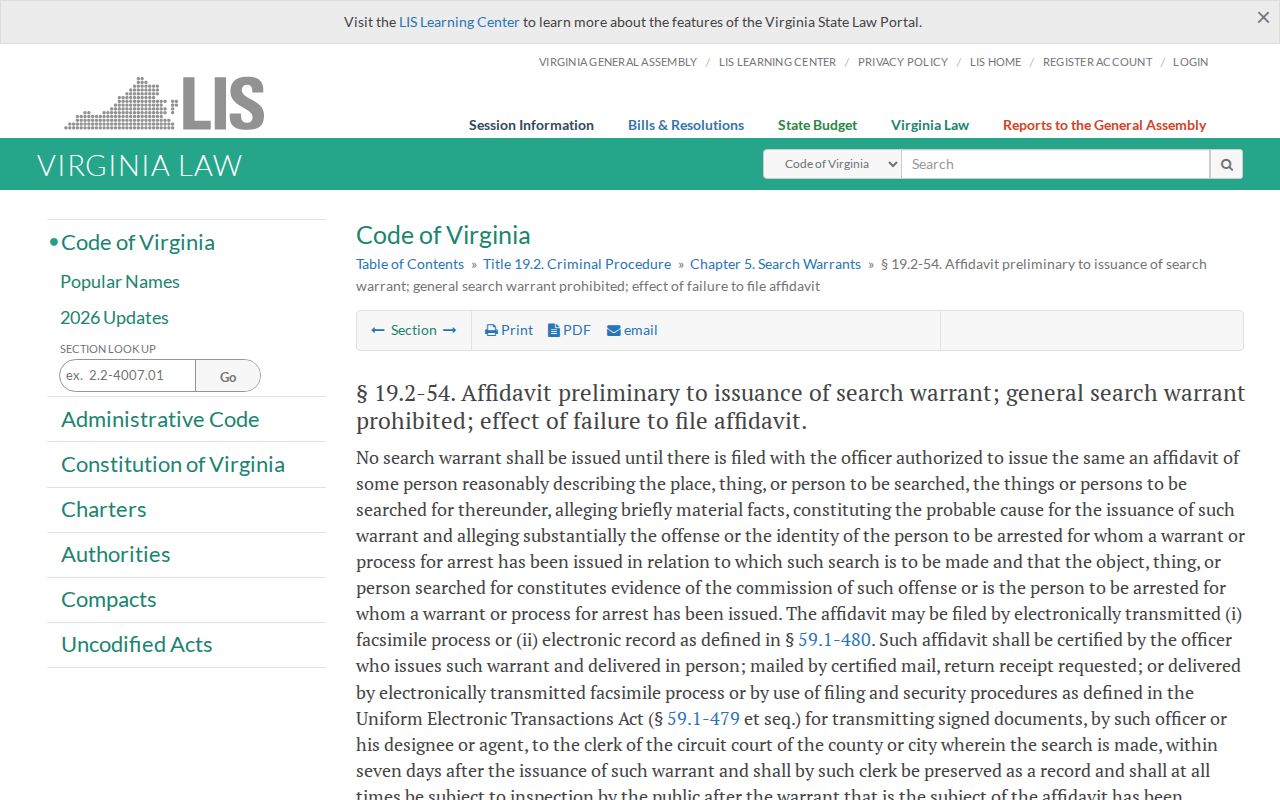
A search warrant lets an officer search a described place, person, or item for evidence. It is not an arrest warrant. Having one does not mean the subject also has an arrest warrant in Virginia Beach City. The DC-338 affidavit spells out the requested search, the probable-cause facts, source information, and any nighttime request. Va. Code § 19.2-54 governs affidavits and returns. It sets filing and public-access timing. Good cause shown to a judge can seal a file for a time. So a search record may not be public at once. Ask the Circuit clerk about timing and any order restricting access. Section 19.2-54 sets the timing rules, and the Virginia Code search-warrant section shows why access can lag.
Ask the Circuit clerk about the file’s timing and any court order limiting access.
Handling an Arrest Warrant in Your Name
Suppose a Virginia Beach City court or your attorney confirms process in your name. Ask two things fast. What does the order say, and what options do you have? The court controls recall and any later bond changes, while the magistrate may set initial bail. No webpage can calculate an individual bond for you or promise that walking in will resolve the case.
- Confirm the issuing court and case number.
- Ask a Virginia attorney about timing, custody, and the right way to appear.
- Follow the clerk’s filing instructions or the process counsel identifies.
- Obtain a court order or written confirmation after a hearing or surrender.
Do not rely on a name-only match: Confirm identity and current process with the issuing court or counsel before acting on a public case result.
Virginia Beach Arrest Warrant Service Gaps
The online case system has limits worth knowing. Virginia Beach City's OCIS may show a case yet omit the warrant return, police service status, a sealed affidavit, or a current bail order. Recent process may not be entered yet. Protected records may be withheld too. So a public warrant lookup and a police agency record can differ, and neither page shows the whole case. Ask the clerk what the docket says. Ask whether the court can confirm service or recall. If an arrest seems possible, counsel can pull the right information rather than trusting an old page as current proof. The Fugitive Apprehension Unit page explains service work, while the clerk confirms the case file.